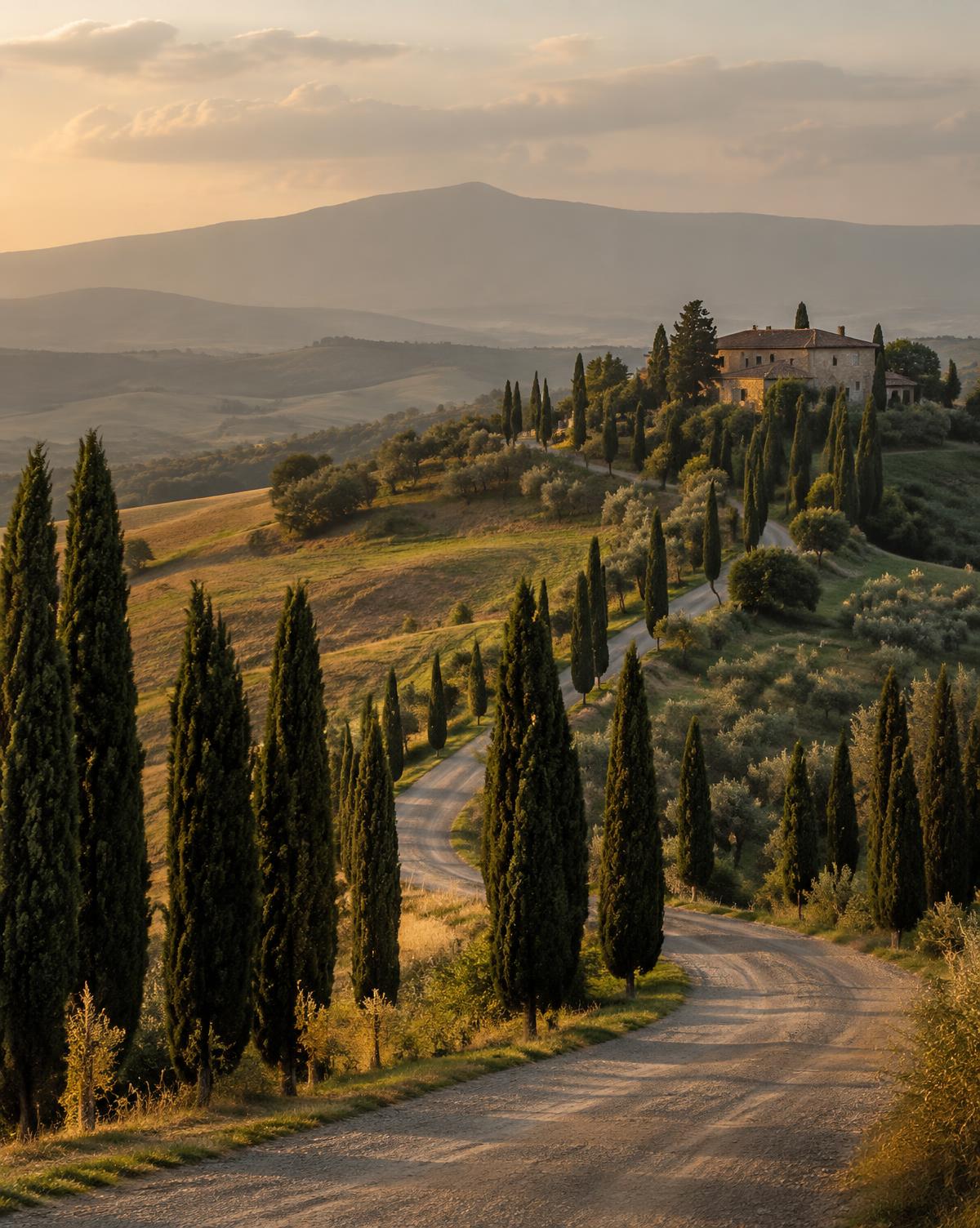
Italy
Cities, coastline and countryside in one unhurried week.
Last reviewed September 2026
Few countries reward a well-shaped itinerary like Italy. The distances are short, the trains are good, and the difference between a rushed trip and a memorable one usually comes down to choosing fewer places and staying longer in each.
ITALY at a Glance
Best for
Cities • Food • Coastline • Art & Architecture
- Ideal Stay
- 7–10 Days
- Best Months
- Late April to mid-June, and September to October
- Currency
- Euro (EUR)
- Language
- Italian
- Drive On
- Right
- Emergency
- 112
Official resources
Overview
Italy works best as a small number of bases connected by train. Rome, Florence and Venice sit on fast rail lines, and each one can absorb several days without repetition. The countryside and coast — Tuscany, the Amalfi Coast, Puglia — reward a car or a regional base rather than day trips from a city.
For a first visit, two or three bases over a week is a comfortable rhythm. Each additional city costs you roughly half a day in transit and check-ins.
Why Visit
Italy layers everything travelers usually want into short distances: walkable historic centres, exceptional everyday food, coastline, and hill towns that feel unchanged.
- Rail travel between major cities is fast, frequent and simple to book
- Meals are a reliable highlight at almost every price level
- Enormous variety within a single region, so short trips still feel full
Best Time to Visit
Late spring and early autumn offer the best balance of weather, daylight and manageable crowds. July and August bring heat and the highest visitor numbers, particularly in Rome, Florence and on the coast.
Winter is quiet and often lovely in the cities, though coastal towns and smaller islands reduce services.
How Many Days You Need
Five days suits one city plus a nearby region. Seven days is the classic shape: two cities and a countryside or coastal stay. Ten days lets you add a third region without moving every second morning.
Food & Dining
Regional cooking is the point — dishes change noticeably between Rome, Bologna, Naples and Sicily. Booking dinner a day ahead is normal in popular centres, and lunch is often the better value meal.
Weather & When to Go
Summers are hot and dry in the south and humid in the north. Spring and autumn are mild with occasional rain. Mountain regions in the north hold snow well into spring.
Safety
Italy is a well-travelled destination with good infrastructure. The most common issues visitors report are pickpocketing in crowded transit hubs and tourist areas. Keep documents in your accommodation safe and carry only what you need for the day.
Airports & Arrival
Rome Fiumicino
FCOMain international gateway for central and southern Italy, with a direct express train into central Rome.
Airport transport
- Airport express train
- Regional trains
- Taxis (fixed city fare)
- Private transfers
- Rental cars
Milan Malpensa
MXPBest for northern Italy, the lakes and onward rail travel across Europe.
Airport transport
- Airport rail link
- Coaches to central Milan
- Taxis
- Rental cars
Venice Marco Polo
VCEClosest airport to Venice; water transfers reach the historic centre directly.
Airport transport
- Water bus and water taxi
- Airport buses
- Land taxis to Piazzale Roma
Flight schedules, fares and transport services change. Check official airport and operator information close to your travel date.
Getting Around
- High-speed trains between Rome, Florence, Bologna, Milan and Venice
- Regional trains for smaller towns — slower, inexpensive, frequent
- Walking is the main way to see historic centres
- Rental cars for Tuscany, Umbria and Puglia; avoid them for city stays
- Ferries along the Amalfi Coast and to the islands in season
- Note restricted traffic zones in historic centres if driving
Official operators: Trenitalia (national rail) • Italo (high-speed rail). Check timetables close to your travel date.
Where to Stay
Choose the area before the property — it shapes the trip far more than the room does.
Rome — Centro Storico
Best for First visits
Walkable to most landmarks; quieter in the side streets than it looks on a map.
Rome — Trastevere
Best for Evenings and dining
Lively at night, still close to the centre on foot.
Florence — Oltrarno
Best for Romantic stays
Across the river from the crowds, with workshops and neighbourhood restaurants.
Venice — Dorsoduro
Best for Calm and scenic
Residential feel, good museums, short walks to the main sights.
Maps & Routes
An orientation map for Italy is most useful at the region level: the rail spine from Rome to Venice, the Tuscan hill towns, and the Amalfi Coast road south of Naples.
Rome – Florence – Venice rail corridor
The classic first-trip line, served by high-speed trains between the three main stations.
Open in Google MapsTuscany orientation
Florence, Siena and the Val d'Orcia hill towns — the area most visitors explore by car.
Open in Google MapsNaples & the Amalfi Coast
Naples, Sorrento, Positano and Amalfi — the coast road is narrow, so many travelers use ferries and buses.
Open in Google Maps
Routes open in Google Maps for orientation. Drive times vary with season, traffic and road conditions — download offline maps before you travel.
Current weather & conditions
Seasonal patterns are a planning guide, not a forecast. Check current conditions for Italy in the days before you travel, and again before any driving or hiking day.
Check Current WeatherWhat to Pack
Packing
European city vacation packing
Adjust for your season and activities — this list is a starting point, not a requirement.
For U.S. Travelers
Before You Go — Italy
Practical starting points for the paperwork side of your trip. Entry, health and safety requirements change, so treat everything here as an orientation and confirm the details through official sources.
Passport & Entry Requirements
Requirements depend on your nationality, the purpose of your trip and how long you're staying. Check the official destination page before booking, and again before you fly.
U.S. Department of State destination informationVisa, eTA or Electronic Authorisation
Some destinations require a visa in advance, others an electronic authorisation, and many allow visa-free entry for short visits. These systems are added and amended periodically, so verify current rules through official channels rather than previous experience.
Passport Validity
Countries set their own validity rules — often several months beyond your date of entry. Airlines can deny boarding if your passport doesn't meet the destination's requirement.
Check current destination requirementsTravel Advisories
Advisories describe current conditions and practical considerations for each country. Read the destination page rather than the headline level alone.
Current travel advisoriesHealth & Vaccination Information
Official travel health pages list recommended and required vaccinations and current health notices by destination. We don't provide medical advice — speak with a qualified healthcare professional about your own circumstances.
CDC Travelers' Health — ItalySTEP — Smart Traveler Enrollment Program
A free U.S. Department of State service that lets citizens and nationals enrol their trip with the nearest embassy or consulate, receive destination safety updates, and be contacted more easily in an emergency.
Official STEP informationEmergency Information
Note the local emergency number and the location of the nearest U.S. embassy or consulate before you travel. Keep emergency contacts written down as well as stored on your phone.
Nearest U.S. embassy or consulateEntry requirements, advisories, health guidance and regulations change without notice. This section was last reviewed in September 2026 and is editorial guidance only — it is not an official source and should never be relied on in place of current government information.
Safety & Travel Preparedness
Sensible preparation rather than worry. A short checklist covers most of what matters.
- Read the current official travel advisory for your destination.
- Note the local emergency number — 112 here and save it in your phone.
- Locate the nearest embassy or consulate and note its contact details.
- Keep digital and paper copies of your passport and key confirmations.
- Keep your accommodation address written down, including in the local language.
- Review travel insurance terms against your actual itinerary.
- Arrange phone and data access before you land.
Frequently Asked Questions
- Do I need to rent a car in Italy?
- Not for a city-based trip. Trains connect the major cities quickly. A car helps only for countryside regions such as Tuscany, Umbria or Puglia.
- How many cities should I visit in a week?
- Two, or three at most. Each move costs roughly half a day once you account for packing, transit and check-in.
- Is it worth booking museums in advance?
- Yes for major sites in Rome, Florence and Venice, particularly in spring and autumn when timed entry sells out.
Keep planning Italy
Itinerary • 7 days
7 Days in Italy
Rome, Florence and Venice with a countryside day — three bases, two train journeys, no wasted mornings.
Itinerary
The Perfect 7-Day Italy Itinerary
How to shape a week in Italy around two or three bases instead of five — with the train journeys, timings and trade-offs made clear.
Know Before You Go
How to Plan a Multi-City European Vacation
A simple framework for choosing cities, ordering them and not losing half your trip to travel days.
Comparison
7 Days vs. 10 Days in Italy
What three extra days actually buy you in Italy — and what they don't.